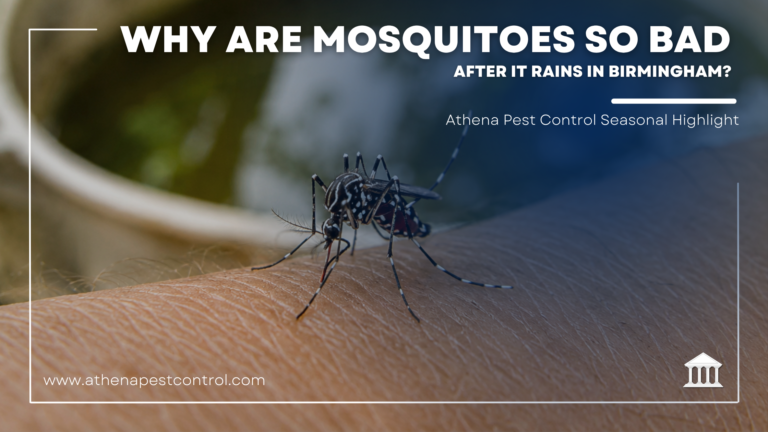
Why Are Mosquitoes So Bad After It Rains in Birmingham?
The answer has less to do with the rain itself, and more to do with what happens in your yard afterward.
If you’ve lived through a Birmingham summer, you’ve probably had this experience.
A thunderstorm rolls through in the afternoon. The air cools off just enough to make sitting outside sound appealing. You pour a drink, fire up the grill, or step onto the patio with the kids.
Within minutes, you’re swatting mosquitoes.
It feels like they appeared overnight.
The truth is, they almost did.
Summer rain doesn’t magically create mosquitoes, but it creates the perfect conditions for mosquitoes that were already waiting. Combined with Birmingham’s warm temperatures, high humidity, and shaded landscapes, a single storm can quickly turn an ordinary backyard into an ideal breeding environment. According to the Centers for Disease Control and Prevention (CDC), mosquitoes lay their eggs in or near standing water, and even small amounts can support their life cycle.
The good news? Understanding why mosquitoes seem to explode after rain can help you stay one step ahead of them.
Why Rain Makes Mosquitoes Seem Everywhere
Rain is only part of the story.
Mosquitoes spend much of their lives before they ever become flying insects. Female mosquitoes lay eggs in places where water collects, and many species are incredibly efficient at finding tiny pockets of standing water around residential properties.
After a summer storm, those forgotten areas around your yard suddenly become nurseries.
Warm temperatures speed up mosquito development, meaning larvae can mature into biting adults in as little as a week under favorable conditions. When Birmingham experiences frequent afternoon rainstorms followed by hot, humid weather, mosquito populations can grow surprisingly fast.
That’s why it often feels like mosquitoes arrive all at once after several rainy days.
For more information on mosquitoes & other pests, check out our Pest Library for a comprehensive overview.
Five Places Around Your Home Mosquitoes Love
When most people think of standing water, they picture ponds or large puddles.
In reality, mosquitoes are much less picky.
Here are five of the most common breeding areas homeowners overlook:
1. Clogged Gutters
Leaves and debris trap rainwater, creating long stretches of shallow, stagnant water that often go unnoticed.
Cleaning gutters regularly not only protects your home from water damage, but also removes one of the most common mosquito breeding sites.
2. Flower Pot Saucers
Decorative planters are everywhere during Alabama summers.
Unfortunately, the saucers underneath them often hold water for days after rainfall.
Emptying these regularly is one of the easiest ways to reduce mosquito activity around patios and porches.
3. Kids’ Toys and Outdoor Equipment
Buckets.
Toy trucks.
Plastic slides.
Even an upside-down frisbee can collect enough water for mosquitoes to lay eggs.
A quick walk around the yard after every rainstorm can eliminate dozens of potential breeding sites.
4. Bird Baths and Decorative Water Features
Bird baths bring wildlife into the yard, but the water should be emptied, scrubbed, and refreshed at least once each week.
If you have ornamental water features that cannot be drained, proper maintenance becomes even more important.
5. Low Spots in the Yard
Not every breeding site sits in a container.
Poor drainage, compacted soil, or areas where water consistently pools after rain can all contribute to larger mosquito populations over time.
Why Birmingham Homes Are Especially Vulnerable
Mosquitoes thrive where warmth and moisture meet.
Unfortunately, Birmingham provides both for much of the summer.
Our long growing season, frequent rainfall, mature tree canopy, and naturally humid climate create ideal conditions for mosquitoes to survive and reproduce.
Many neighborhoods also feature shaded backyards, dense landscaping, mulch beds, and irrigation systems that help retain moisture throughout the day.
Even when standing water disappears from the surface, shaded environments provide cool resting places where adult mosquitoes spend the hottest parts of the afternoon before becoming active again around dusk.
What You Can Do This Weekend
You don’t need a major landscaping project to make your yard less attractive to mosquitoes.
Start with a simple 15-minute inspection after the next rainfall.
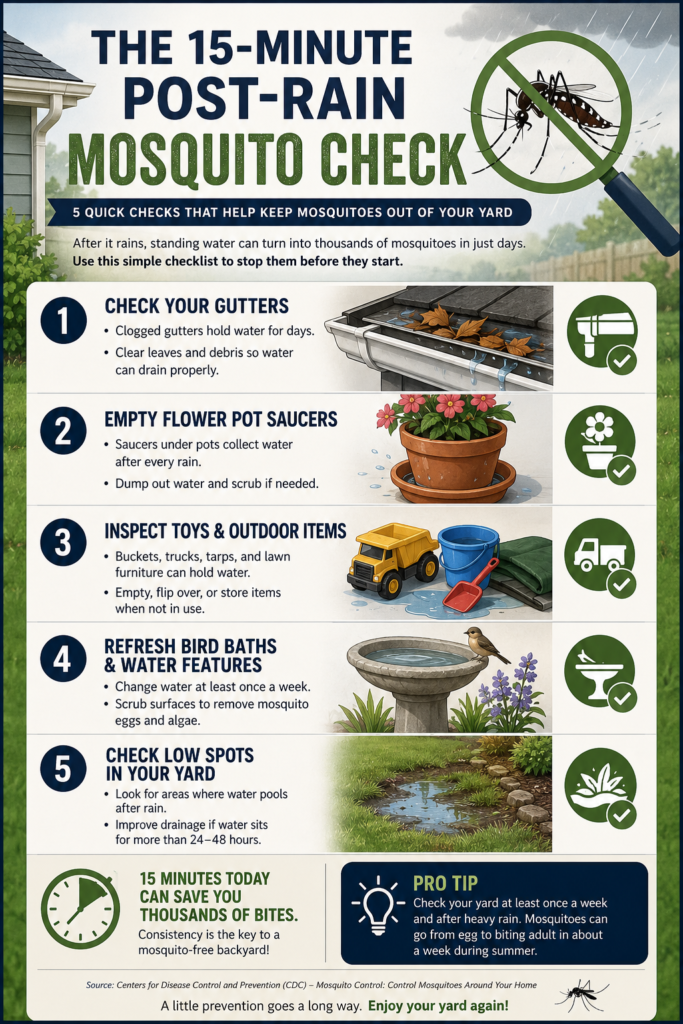
Walk around your property and ask yourself:
- Are my gutters draining properly?
- Is there standing water in flower pots or planters?
- Have toys, buckets, or tarps collected rainwater?
- Does water pool anywhere in the yard for more than a day?
- Are bird baths being cleaned regularly?
- Is vegetation around patios becoming overly dense?
The CDC recommends checking your property at least once each week for containers holding water because mosquitoes can complete their life cycle surprisingly quickly under the right conditions.
Small changes repeated consistently often have a much bigger impact than most homeowners realize.
When DIY Prevention Isn’t Enough
Sometimes, homeowners do everything right and still struggle with mosquitoes.
That’s because mosquitoes don’t recognize property lines.
A neglected drainage ditch.
A nearby wooded area.
Standing water on neighboring properties.
Even natural breeding habitats beyond your yard can continually introduce new mosquitoes into your outdoor living spaces.
If mosquito activity is preventing your family from enjoying evenings outside, grilling on the patio, or letting the kids play comfortably in the backyard, professional mosquito treatments can provide another layer of protection by targeting adult mosquitoes while helping interrupt their breeding cycle.
Professional treatments work best as part of an overall strategy that includes eliminating standing water and reducing conditions that attract mosquitoes in the first place.
Enjoy Your Backyard Again
Summer should be spent making memories outside, not counting mosquito bites.
While Birmingham’s weather naturally creates favorable conditions for mosquitoes, understanding what attracts them gives homeowners an advantage.
A quick inspection after every rainfall, regular maintenance around your property, and addressing standing water before mosquitoes have time to develop can dramatically reduce activity throughout the season.
And when mosquito populations become more than your family can manage alone, professional treatment can help restore comfort to your outdoor spaces.
If you’re ready to spend more time enjoying your backyard and less time swatting mosquitoes, Athena Pest Control is here to help.
Frequently Asked Questions
Why are mosquitoes worse after it rains?
Rain creates new sources of standing water where mosquitoes lay eggs. Combined with Birmingham’s warm summer temperatures, these conditions allow mosquito populations to increase rapidly.
How long does it take mosquitoes to hatch?
Under favorable summer conditions, mosquitoes can develop from egg to biting adult in about a week, depending on the species and environmental conditions.
Can mosquitoes breed in gutters?
Yes. Clogged gutters that hold standing water are one of the most common mosquito breeding locations around residential properties.
How often should I check my yard for standing water?
The CDC recommends inspecting your property at least once each week and after heavy rainfall to remove or empty containers that collect water.
Is professional mosquito treatment worth it?
For many homeowners, especially during Birmingham’s long mosquito season, professional treatments can significantly reduce mosquito populations when combined with good property maintenance and standing water prevention.
Sources: CDC- Mosquito Control at Home, EPA- Mosquito Control, Alabama Cooperative Extension System- Reducing the Impact of Mosquitoes